
Different Types of Concrete and Their Unique Benefits: A Comprehensive Guide
Concrete is a fundamental material in construction, known for its versatility and strength. This comprehensive guide explores the different types of concrete and their unique benefits, providing insights into their applications and characteristics. Understanding these variations is crucial for selecting the right type of concrete for specific projects, whether for residential, commercial, or industrial use. Many builders and architects face challenges in choosing the appropriate concrete type that meets both structural and aesthetic requirements. This guide aims to clarify these options, helping you make informed decisions. We will cover the main types of concrete, their unique benefits, environmental considerations, common applications, optimisation techniques, and the latest innovations in concrete technology.
What Are the Main Types of Concrete Used in Construction?
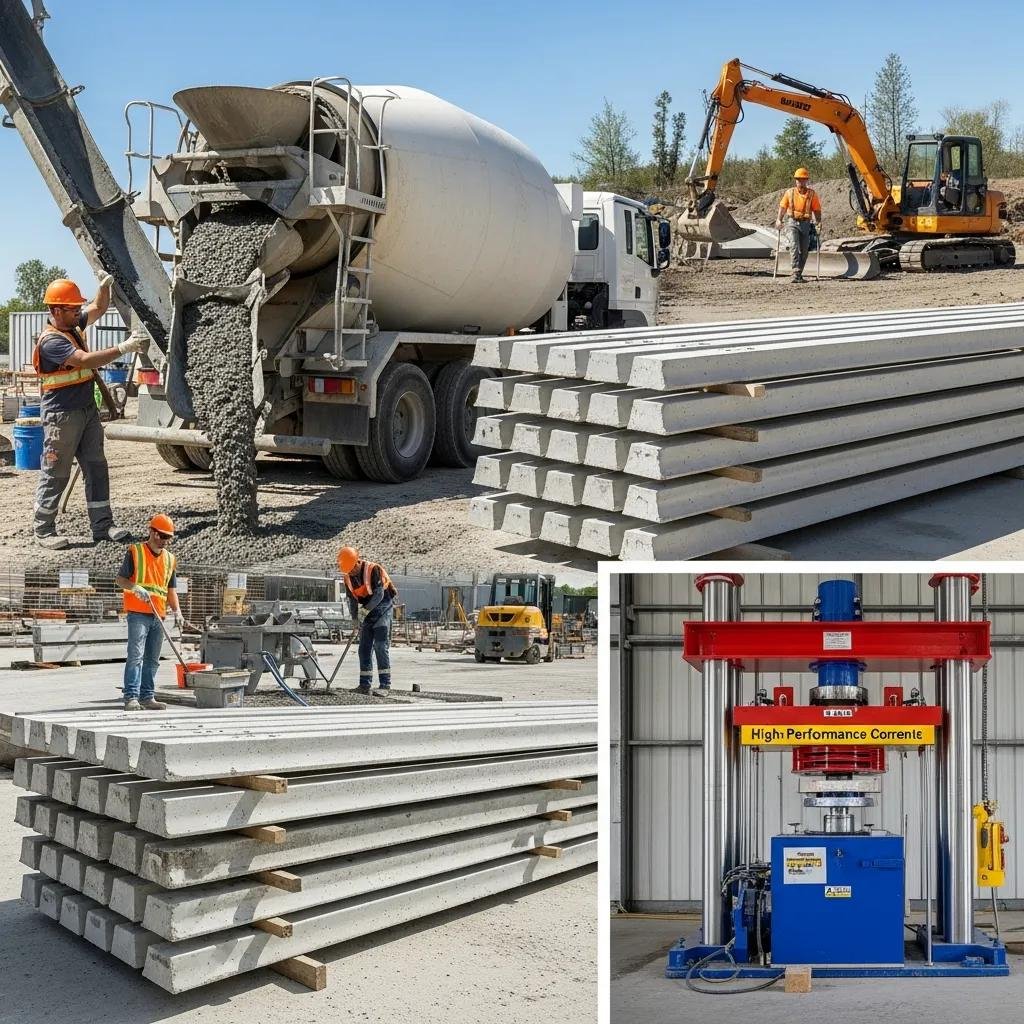
Concrete comes in various forms, each tailored for specific applications and performance characteristics. The primary types of concrete used in construction include:
- Ready-Mix Concrete: This type is pre-mixed in a batching plant and delivered to the construction site, ensuring consistent quality and reducing on-site mixing time.
- Precast Concrete: Manufactured in controlled environments, precast concrete elements are cast into specific shapes and cured before being transported to the site for assembly.
- High-Performance Concrete: Designed for superior strength and durability, this type often includes supplementary cementitious materials and chemical admixtures to enhance its properties, making it suitable for demanding applications.
Understanding these types allows builders to select the most appropriate concrete for their projects, ensuring structural integrity and longevity.
How Does Ready-Mix Concrete Differ from Precast Concrete?
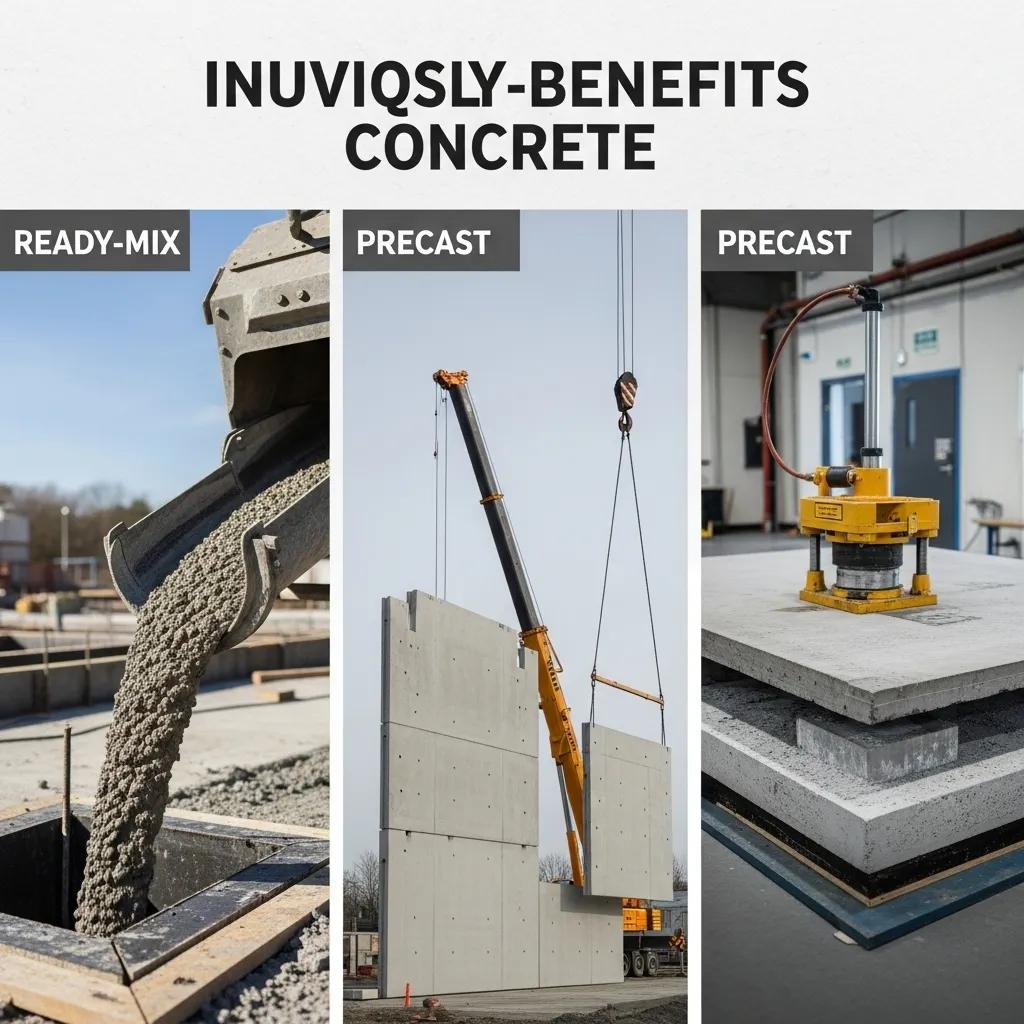
Ready-mix concrete is produced in a batching plant and delivered to the site, allowing for immediate use. It is ideal for projects requiring large volumes of concrete poured quickly, such as foundations and slabs. In contrast, precast concrete is cast in molds and cured in a factory setting, which allows for greater control over the curing process and the ability to produce complex shapes. This method is often used for components like beams, walls, and architectural elements, providing flexibility in design and faster construction times.
What Are the Characteristics of High-Performance Concrete?
High-performance concrete is characterised by its enhanced durability, strength, and resistance to environmental factors. It typically contains supplementary cementitious materials (such as fly ash, silica fume, or slag) and chemical admixtures that improve its workability and longevity. This type of concrete is particularly beneficial in applications exposed to harsh conditions, such as bridges, high-rise buildings, and industrial structures. Its ability to withstand extreme weather and chemical exposure makes it a preferred choice for critical infrastructure projects.
What Are the Unique Benefits of Each Concrete Type?
Each type of concrete offers distinct advantages that cater to specific construction needs. Understanding these benefits can help in making informed decisions for various projects.
- Ready-Mix Concrete:
Consistency: Ensures uniform quality and performance.Time-Saving: Reduces on-site mixing time, allowing for faster project completion.Cost-Effective: Minimises labor costs associated with mixing on-site. - Precast Concrete:
Quality Control: Manufactured in controlled environments, leading to higher quality.Design Flexibility: Can be molded into various shapes and sizes for architectural applications.Reduced Construction Time: Elements can be produced simultaneously with site preparation. - High-Performance Concrete:
Enhanced Durability: Offers superior resistance to wear, weather, and chemicals.Longer Lifespan: Reduces maintenance costs over time due to its durability.Sustainability: Often incorporates supplementary cementitious materials that can reduce cement content, contributing to eco-friendly construction practices.
| Concrete Type | Benefit | Application |
|---|---|---|
| Ready-Mix Concrete | Consistency and time-saving | Foundations, slabs |
| Precast Concrete | Quality control and design flexibility | Beams, walls, architectural elements |
| High-Performance Concrete | Enhanced durability | Bridges, high-rise buildings |
These unique benefits highlight the importance of selecting the right type of concrete based on project requirements and environmental conditions.
How Do Environmental Factors Influence Concrete Type Selection?
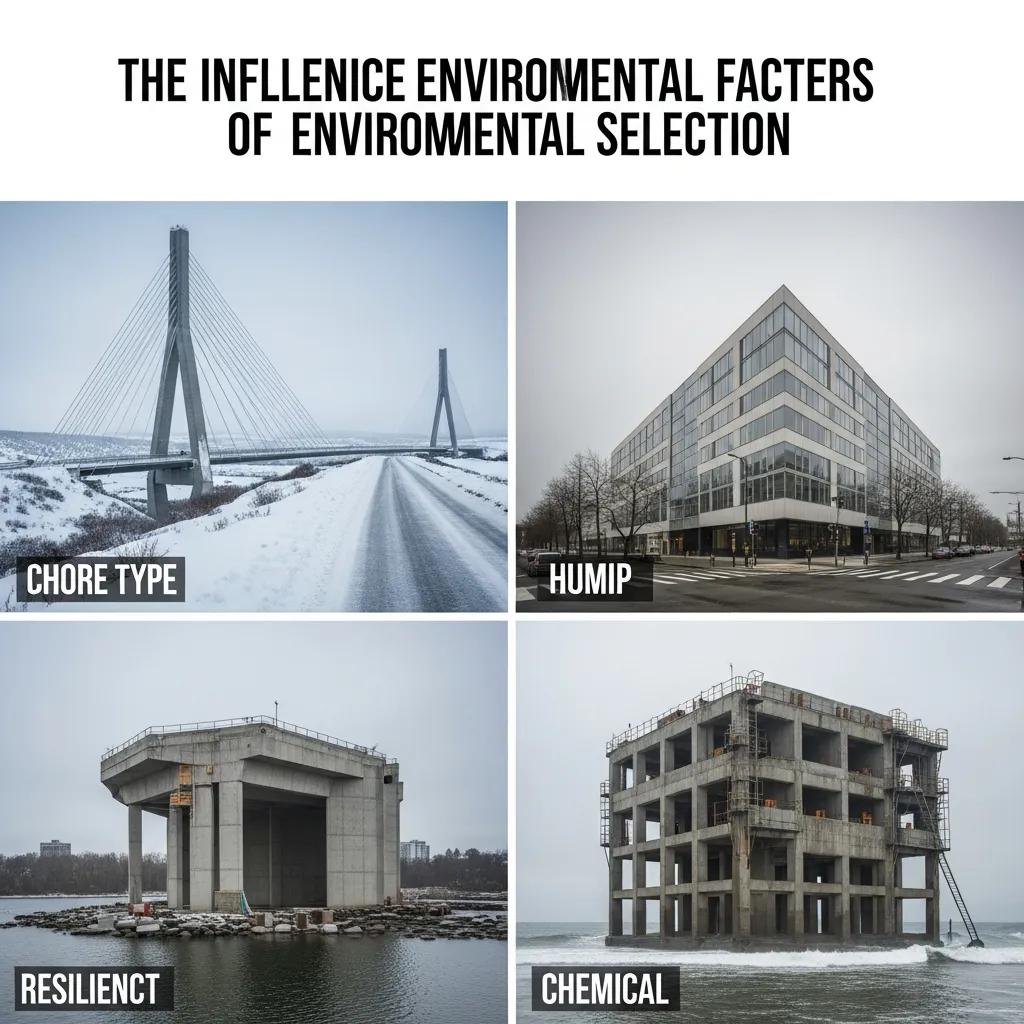
Environmental factors play a significant role in determining the appropriate type of concrete for construction projects. Factors such as temperature, humidity, and exposure to chemicals can affect the performance and longevity of concrete.
- Temperature: In regions with extreme temperatures, selecting a concrete type that can withstand thermal expansion and contraction is crucial. High-performance concrete is often preferred in such conditions due to its enhanced durability.
- Humidity: In areas with high humidity, moisture-resistant concrete types can prevent issues like efflorescence and corrosion of reinforcement.
- Chemical Exposure: For projects near industrial sites or in coastal areas, using concrete with chemical resistance is essential to ensure longevity.
Which Concrete Types Are Best for Cold Weather Conditions?
Cold weather can significantly impact the curing process of concrete. Types such as high-performance concrete are often recommended for cold weather applications due to their ability to maintain strength and durability even in low temperatures. Additionally, using accelerators in the mix can help speed up the curing process, ensuring that the concrete reaches its desired strength in a timely manner.
What Are the Advantages of Using Sustainable Concrete Mixes?
Sustainable concrete mixes incorporate recycled materials and environmentally friendly practices, reducing the carbon footprint of construction projects. Benefits include:
- Resource Conservation: Utilising recycled aggregates and industrial by-products minimises waste.
- Lower Emissions: Sustainable mixes often require less energy to produce, leading to reduced greenhouse gas emissions.
- Enhanced Performance: Many sustainable mixes offer comparable or superior performance to traditional concrete, making them a viable option for modern construction.
What Are the Common Applications for Different Concrete Types?
Concrete is used in a wide range of applications, each benefiting from specific types of concrete tailored to meet performance requirements.
- Ready-Mix Concrete: Commonly used for residential foundations, driveways, and sidewalks due to its ease of use and quick setting time.
- Precast Concrete: Ideal for constructing bridges, parking structures, and modular buildings, where speed and quality are paramount.
- High-Performance Concrete: Often employed in high-stress environments such as bridges, tunnels, and high-rise buildings, where durability and strength are critical.
Where Is Self-Consolidating Concrete Most Effectively Used?
Self-consolidating concrete (SCC) is particularly effective in applications requiring intricate forms and reinforcement placement. Its high flowability allows it to flow into tight spaces without the need for vibration, making it ideal for complex architectural designs and precast elements. SCC is commonly used in high-rise buildings and structures with dense reinforcement, ensuring uniformity and reducing labor costs.
How Does Decorative Concrete Add Value to Architectural Projects?
Decorative concrete enhances the aesthetic appeal of structures while providing the same durability as traditional concrete. Techniques such as stamping, staining, and polishing allow for a variety of finishes that can mimic natural materials like stone or wood. This versatility makes decorative concrete a popular choice for driveways, patios, and commercial spaces, adding value through both functionality and visual appeal.
How Can You Optimise Concrete Performance Through Mix Design?
Optimising concrete performance begins with careful mix design, which involves selecting the right materials and proportions to achieve desired properties. Key considerations include:
- Water-Cement Ratio: Lowering the water-cement ratio can enhance strength and durability, but care must be taken to maintain workability.
- Admixtures: Incorporating chemical admixtures can improve workability, accelerate curing, or enhance durability, depending on project needs.
- Aggregate Selection: Choosing the right type and size of aggregates can significantly impact the strength and performance of the concrete.
What Role Do Admixtures Play in Enhancing Concrete Properties?
Admixtures are substances added to concrete to modify its properties. They can improve workability, accelerate setting time, or enhance durability. Common types of admixtures include:
- Plasticizers: Improve workability without increasing water content.
- Accelerators: Speed up the curing process, beneficial in cold weather.
- Retarders: Delay setting time, useful in hot weather or for large pours.
How Does Aggregate Selection Affect Concrete Strength and Workability?
The selection of aggregates is crucial in determining the overall performance of concrete. Factors to consider include:
- Size: Larger aggregates can improve strength but may reduce workability.
- Shape: Angular aggregates provide better interlocking, enhancing strength.
- Gradation: A well-graded aggregate mix can improve packing density, leading to better strength and reduced voids.
What Are the Latest Innovations in Concrete Technology?
Recent advancements in concrete technology have led to the development of new materials and methods that enhance performance and sustainability. Innovations include:
- Nanomaterials: Incorporating nanomaterials into concrete can improve strength and durability at a microscopic level, leading to enhanced performance.
- 3D-Printed Concrete: This technology allows for the rapid construction of complex structures, reducing waste and labor costs while enabling innovative designs.
- Self-Healing Concrete: This type of concrete contains bacteria or healing agents that can repair cracks autonomously, extending the lifespan of structures.
How Are Nanomaterials Improving Concrete Durability?
Nanomaterials, such as nano-silica and carbon nanotubes, are being integrated into concrete mixes to enhance properties like strength, durability, and resistance to environmental factors. These materials work at the molecular level to fill voids and improve the bonding between particles, resulting in a denser and more resilient concrete.
What Benefits Do 3D-Printed Concrete Structures Offer?
3D-printed concrete structures offer several advantages, including:
- Design Flexibility: Allows for the creation of complex geometries that are difficult to achieve with traditional methods.
- Reduced Waste: Minimises material waste by using only the necessary amount of concrete.
- Faster Construction: Significantly speeds up the building process, making it possible to complete projects in a fraction of the time.
In conclusion, understanding the different types of concrete and their unique benefits is essential for making informed decisions in construction. By considering factors such as environmental conditions, application requirements, and recent technological advancements, builders can optimise concrete performance and ensure the longevity of their structures.
Types of Concrete: Benefits, Applications and Selection Guide
Understanding the various types of concrete and their unique benefits is crucial for making informed construction decisions. Each type, from ready-mix to high-performance concrete, offers distinct advantages that cater to specific project needs and environmental conditions. By leveraging this knowledge, builders can enhance structural integrity and longevity while optimising performance. Explore our resources to discover more about selecting the right concrete for your next project.
Types of Concrete: Benefits, Applications and Selection Guide
Understanding the various types of concrete and their unique benefits is crucial for making informed construction decisions. Each type, from ready-mix to high-performance concrete, offers distinct advantages that cater to specific project needs and environmental conditions. By leveraging this knowledge, builders can enhance structural integrity and longevity while optimising performance. Explore our resources to discover more about selecting the right concrete for your next project.