

By Kettle and Black Editorial Team · Updated 2026-08-30
Concrete slabs require a compacted base extending roughly 75mm beyond the finished slab edge for formwork, with load-bearing areas like driveways needing 10- to 12-inch bases. Kettle and Black, based in Lincoln, Lincolnshire, employs 15 tradespeople experienced in preparing well-drained, properly levelled sites before pouring.
This Lincolnshire concrete guide covers clearing the site, removing topsoil and stones, then compacting a hardcore sub-base roughly 75mm wider than the finished slab. Kettle and Black is located in Lincoln, Lincolnshire, GB, and has 15 employees.
Key Takeaways
- Clear the site thoroughly by removing stones, weeds, and topsoil to create a flat surface.
- Prepare a 4- to 6-inch compacted soil base before pouring concrete on any job site.
- Obtain all necessary permits and locate underground plumbing or wiring before beginning concrete work.
- Build concrete forms and gather all required materials before starting the pouring process.
What Do You Need Before Laying Concrete In Lincolnshire?
Three ingredients form the foundation of every pour: cement, water and aggregates such as sand and gravel. Concrete mix ratios decide strength, workability and finish, so getting proportions right matters more than most Lincolnshire homeowners realise. A guide to laying concrete begins with understanding these ratios before any tools touch the ground.
Most domestic jobs across Lincolnshire call for normal strength concrete. This standard mix suits shed bases, garden paths, extension footings and driveways throughout Lincoln, Sleaford and Grantham. Specialist mixes exist for other applications, but normal strength covers the majority of residential projects.
What Materials And Tools Does A Homeower Need Before Pouring?
Preparation determines success long before concrete arrives on site. Gather these essentials first:
- Timber or formwork to shape and contain the slab edges.
- A compactor or tamper for the sub-base.
- Levelling tools, including a spirit level and screed board.
- Confirmed access for volumetric concrete delivery or concrete pumping lincolnshire vehicles.
Who Can Homeowners Ask For Local Advice?
Local guidance shortens the learning curve considerably. Kettle and Black is located in Lincoln, Lincolnshire, GB. Questions about mix selection, quantities or timing rarely need to wait for a site visit.
A 15-strong team supports customers through planning, from selecting the correct [ready mix concrete](https://kettleandblack.co.uk/) lincolnshire suppliers can provide, to confirming volumes and delivery windows. That support proves useful for anyone working out how to lay a concrete slab for the first time. Choosing kettle and black concrete means pairing local knowledge with dependable supply, reducing the guesswork that trips up first-time pours.
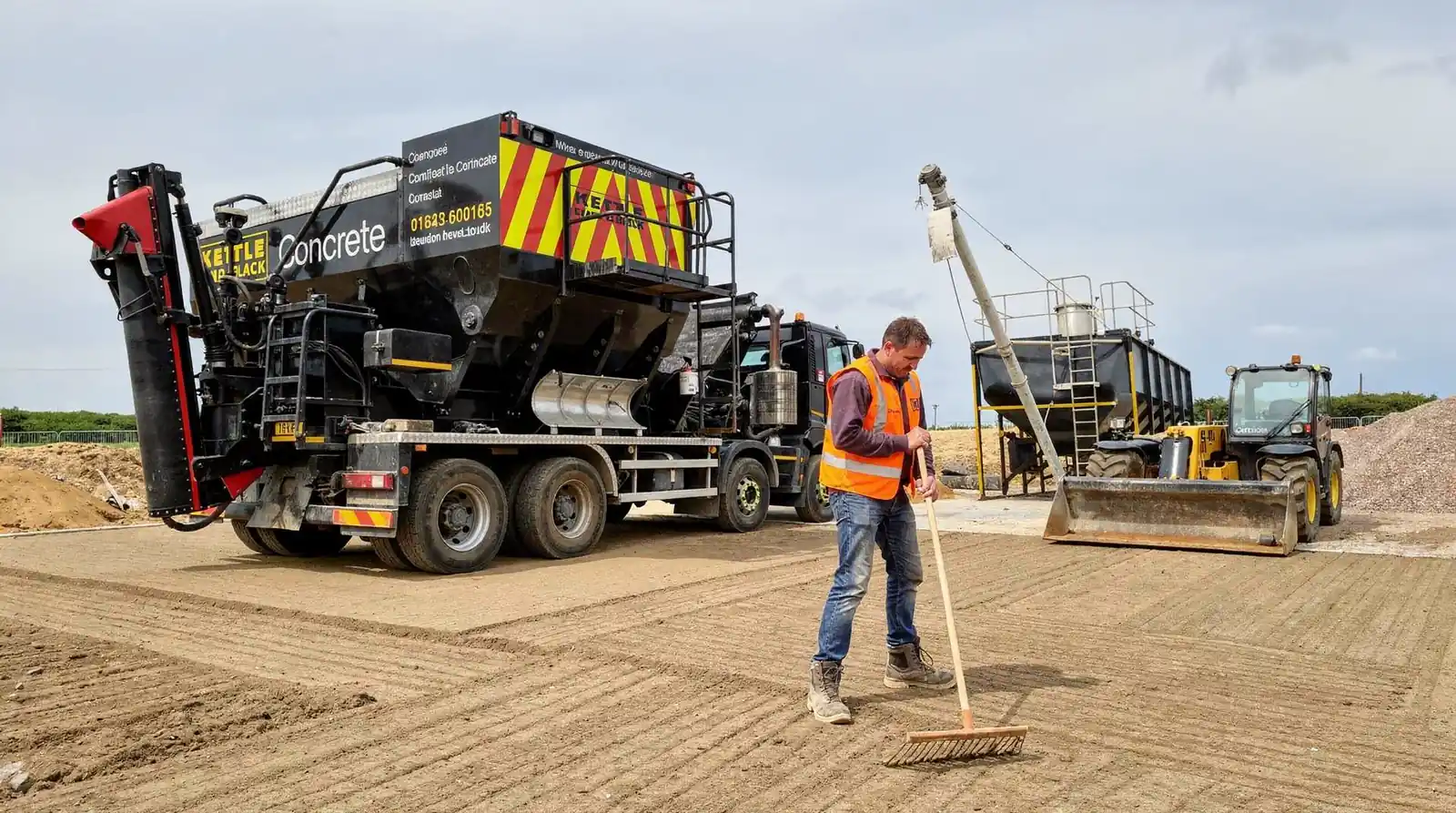
How Do You Prepare The Ground For Concrete?
Concrete slab preparation determines whether a slab lasts decades or cracks within a single Lincolnshire winter. Skipping proper site groundwork risks uneven settling, drainage failure, and costly repairs down the line. Correct preparation follows a clear sequence, from clearing the site through to compacting the sub-base, and each stage supports the next — the same discipline applies to domestic concrete laying across patios, paths and driveways.
What Steps Come First When Clearing A Site?
Clearing always comes before anything else touches the ground. Follow this sequence for a solid start:
- Remove all stones, weeds and any loose debris from the working area.
- Strip away the layer of topsoil, since organic material shifts and rots beneath a slab.
- Level off remaining bumps using a spade or rake until the surface sits flat and even.
- Mark out the base so it extends roughly 75mm beyond the finished slab on each side, leaving room for formwork.
This groundwork guide to laying concrete applies whether the project is a garden patio in Sleaford or a driveway extension near Lincoln. Rushing this stage causes far more problems than it saves in time.
How Deep Should The Sub-Base Be?
Most domestic jobs need a compacted sub-base of around 4 to 6 inches. Driveways and other load-bearing slabs demand more, since they carry vehicle weight and repeated stress. Builders tackling how to lay a concrete slab for a shed base or extension footing should compact this layer thoroughly with a plate compactor before concrete arrives.
Once the ground sits flat, cleared and correctly depth, access matters just as much as preparation. Kettle and Black concrete reaches customers across Lincoln, Sleaford, Woodhall Spa. The wider county, so planning vehicle access for ready mix concrete Lincolnshire deliveries, or arranging concrete pumping Lincolnshire for harder-to-reach plots, should form part of the site plan from day one.

Which Ready-Mix Concrete Suits Your Lincolnshire Project?
Lincolnshire projects demand different concrete mixes depending on structural load, void space and exposure to freeze-thaw cycles. Driveways and extension footings need strength and durability; trench reinstatement and insulation work call for something far lighter. Matching the mix to the job prevents cracking, subsidence and wasted material down the line.
Foam concrete lincolnshire projects increasingly specify this material for the lightweight brief it answers: a foaming admixture introduces air bubbles during mixing, reducing the density of the finished product. That makes it well suited to void filling, insulation and structural stabilisation across Lincolnshire sites where load-bearing strength matters less than coverage and thermal performance.
Fibre-reinforced concrete takes the opposite approach. Steel, glass or synthetic fibres get embedded during mixing, boosting tensile strength and sharpening resistance to freeze-thaw damage. Driveways, patios and shed bases across the county benefit most from this added durability, particularly where heavy vehicles or harsh winters put extra strain on the slab.
Which concrete mix suits a Lincolnshire driveway or patio base?
Driveways and patios need fibre-reinforced concrete for its tensile strength and freeze-thaw resistance. A bespoke batch gets produced with strength. Consistency tailored to the exact structural requirement, whether that’s a domestic patio or a commercial footing.
Does the concrete supplier deliver and pump in Lincolnshire?
Kettle and Black concrete provides volumetric concrete delivery alongside concrete pumping Lincolnshire clients rely on for hard-to-reach sites. Every batch mixed is BSI-accredited, giving builders and homeowners a quality-controlled product delivered straight to the point of need across the county.
How Do You Pour And Finish The Slab?
Knowing how to pour concrete correctly follows a strict sequence: preparation, placement, then finishing. Skipping steps costs Lincolnshire builders time, materials, and structural integrity further down the line. A proper guide to laying concrete treats delivery access, mix flow, and edge control as equally important stages, not afterthoughts.
Before the lorry arrives, clear the site of obstacles and unnecessary equipment so the vehicle can manoeuvre around the pour area easily. This single step prevents delays that cause partial setting of the mix before placement finishes.
What are the main steps for how to lay a concrete slab?
- Mark out the slab by measuring each side length and placing stakes at every corner, then build formwork against those marks.
- Confirm access routes for the delivery vehicle before ordering ready mix concrete Lincolnshire suppliers dispatch to the site.
- Choose a placement method suited to the site layout — direct chute, wheelbarrow, or pump.
- Pour steadily, working from the far corner back toward the access point.
- Screed, float, and edge the surface before the mix begins to set.
When does concrete pumping make sense on a Lincolnshire site?
Concrete pumping Lincolnshire projects rely on when the mix needs to reach restricted or hard-to-access areas of a site. Ground line pumps stretch great distances across a plot, making them well-suited to larger driveways and extended footing runs across rural Lincolnshire plots. Without a pump, crews depend on traditional methods like wheelbarrows, which slows placement and increases labour demands considerably.
Volumetric concrete delivery solves much of this by mixing on-site to the exact volume required, reducing waste before pumping or pouring begins. Combining volumetric batching with Kettle and Black concrete pumping keeps large or awkward Lincolnshire pours moving steadily from lorry to formwork.
What Mistakes Should You Avoid When Laying Concrete?
Four recurring errors undermine concrete projects across Lincolnshire: poor drainage, missed permit checks, weak compaction, and unclear mix specifications. Each one costs homeowners and builders time and money once cracks or settlement appear months after the pour. Avoiding them starts long before delivery day arrives.
Why does drainage matter so much before pouring?
Waterlogged ground beneath a patio or driveway slab expands and contracts as moisture levels shift. That movement cracks the concrete above, even when the mix itself was correctly specified. Lincolnshire’s clay-heavy soils in areas like the Fens make drainage checks especially critical before any guide to laying concrete process begins.
What should be checked before excavation starts?
Underground plumbing and wiring locations need confirming first. Necessary permits should be secured before digging begins on any garden or driveway project.
Beyond site prep, three further mistakes trip up DIY enthusiasts and local builders alike:
- Skipping compaction – A hardcore sub-base must be compacted with a tamper, roller, or mechanical compactor before concrete goes down; skipping this step leaves slabs prone to settling and cracking.
- Vague mix requirements – Projects need clear specifications discussed with the supplier beforehand, so ready mix concrete Lincolnshire deliveries match the job exactly.
- Ignoring pump access – Sites requiring concrete pumping Lincolnshire services need clear vehicle access planned in advance.
Getting these fundamentals right protects the investment long after the surface has cured.
FAQ
What ingredients go into a concrete mix?
Concrete requires three ingredients: cement, water and aggregates such as sand and gravel. The ratio of these materials decides strength, workability and finish.
What base preparation does a driveway need?
Load-bearing areas like driveways need a 10- to 12-inch compacted base. The sub-base extends roughly 75mm wider than the finished slab for formwork.
Who can Lincolnshire homeowners contact for concrete advice?
Kettle and Black, located in Lincoln, Lincolnshire, offers local guidance through its 15-strong team. They support customers on mix selection, quantities and delivery timing.
Conclusion
In closing, laying concrete successfully in Lincolnshire demands careful planning, precise measurement, and attention to environmental conditions throughout the installation process. By understanding the fundamentals of site preparation, mix selection, and curing requirements, you establish a solid foundation for a durable concrete surface. Whether undertaking a residential project or commercial application, these principles ensure your concrete investment withstands the test of time and local weather conditions.